You Won’t Believe What I Found Wandering Kuching’s Hidden Markets
Wandering through Kuching, Malaysia, feels like flipping through the pages of a living storybook. The air hums with spice, the streets whisper history, and every alley hides a treasure. I wasn’t chasing landmarks—I was hunting for the city’s soul, one specialty product at a time. From handwoven pua kumbu textiles to bold jungle-grown pepper, Kuching’s true magic lies in its crafts and flavors. This is a journey of slow discovery, where the best finds come when you’re not even looking. It’s about tuning into the rhythm of daily life, letting curiosity guide your steps, and allowing the city to reveal itself in quiet moments between markets, conversations, and shared cups of coffee under shaded awnings.
The Art of Wandering: Why Getting Lost in Kuching Leads to the Best Discoveries
Kuching invites you to wander—not as a tourist rushing from one sight to the next, but as a seeker of moments that linger. The act of getting lost here is not a mistake; it’s a strategy. The city’s compact core, where colonial-era buildings stand beside centuries-old shophouses and wooden Malay homes, creates a layered urban landscape that rewards slow exploration. Cobblestone lanes curve unexpectedly, leading to quiet courtyards or open-air stalls where elders sip tea and chat in hushed tones. This is where the real Kuching lives: in the gaps between maps and itineraries.
Walking without a fixed destination allows the senses to take over. The scent of grilled satay drifts from a roadside cart. A burst of color catches your eye—a hand-painted sign advertising local honey or woven baskets. These are not staged for visitors; they are part of everyday commerce, sustained by generations of families who value craftsmanship and community. When you move at a pedestrian pace, you begin to notice subtle rhythms: the way shopkeepers lower bamboo blinds at midday, the children returning from school in crisp uniforms, the call to prayer echoing softly over rooftops.
One morning, I turned down an alley near the Old Courthouse, drawn only by the sound of tapping wood. There, beneath a faded awning, sat an elderly man carving a traditional Iban mask from dark rainforest timber. He spoke little English, but his hands moved with purpose, shaping eyes that seemed to watch the street with ancient wisdom. No signs advertised his stall. It wasn’t listed in any guidebook. Yet, this was exactly the kind of discovery I had come for—not a curated exhibit, but a living tradition unfolding in real time.
To experience Kuching this way, it helps to let go of rigid plans. Leave the map in your bag. Visit early in the morning, when the heat hasn’t yet settled over the city and the markets are just beginning to stir. Alternatively, explore late in the afternoon, when shadows lengthen and the golden light softens the edges of buildings. These quieter hours not only offer relief from the tropical sun but also provide a more intimate view of local life. Vendors are more relaxed, willing to share stories or offer samples. Children play games with bottle caps on concrete floors. The city breathes.
Wandering with intention means being present. It means pausing to watch a woman roll rice cakes by hand, asking permission before taking a photo, and saying “terima kasih” when offered a taste. These small gestures open doors. They transform a simple walk into a dialogue. And in Kuching, where cultures blend seamlessly—Malay, Chinese, Iban, Bidayuh, Melanau—the dialogue is rich, textured, and deeply human.
Sarawak Pepper: More Than a Spice—A Taste of Borneo’s Soil
If Kuching has a flavor, it is Sarawak pepper—bold, floral, and unmistakably alive. Known as the “black gold” of Malaysian agriculture, this peppercorn is grown exclusively in the tropical highlands of Sarawak, where volcanic soil, consistent rainfall, and careful cultivation produce a spice unlike any other. Unlike mass-produced pepper found in supermarkets, Sarawak pepper bursts with complexity: notes of citrus, eucalyptus, and a lingering warmth that builds slowly rather than striking harshly. It is not just a seasoning; it is an expression of place.
I visited a small family-run farm on the outskirts of Kuching, where pepper vines climb tall support trees in neat rows. The air was thick with the scent of damp earth and green growth. The farmer, Mr. Ling, explained that each vine takes three years to mature before producing fruit. Harvesting is done entirely by hand, with workers carefully selecting only the ripest peppercorns. After picking, the berries are washed and sun-dried on large bamboo mats, turning from red to deep black over several days. Some are processed into white pepper by soaking and removing the outer layer, while others remain whole as black peppercorns.
What sets Sarawak pepper apart is its protected geographical indication (GI) status, a certification that ensures authenticity and quality. This means only pepper grown in designated regions of Sarawak can carry the name. The GI label protects both farmers and consumers, preserving the integrity of a product that has gained recognition in Michelin-starred kitchens around the world. Chefs prize it not just for flavor, but for consistency and purity—no additives, no fillers, just pure spice.
For travelers, buying authentic Sarawak pepper is both a culinary and ethical choice. In Kuching, the best places to find it are local markets like the Sunday morning bazaar at Padang Merdeka or specialty shops in the Carpenter Street district. Look for deep color, a strong aroma, and clear labeling that includes the origin and GI certification. Avoid pre-ground versions when possible; whole peppercorns retain their flavor far longer. A simple test: crush a single peppercorn between your fingers. If the scent is sharp and aromatic, you’ve found the real thing.
Bringing home a jar of Sarawak pepper is more than stocking your kitchen—it’s preserving a connection to the land and the people who tend it. Use it to season grilled fish, sprinkle over roasted vegetables, or infuse into oils and vinegars. Each use becomes a quiet celebration of Borneo’s rich agricultural heritage.
Pua Kumbu: Woven Stories from the Iban People
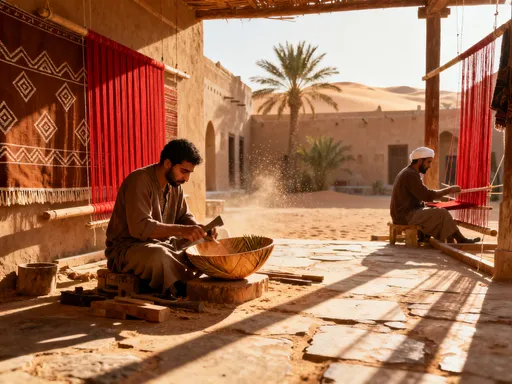
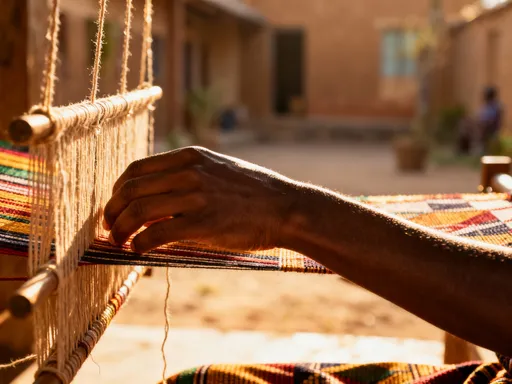
In a quiet village just beyond Kuching’s city limits, I met Madam Sari, a master weaver of pua kumbu, the sacred textile of the Iban people. Inside her longhouse, lit by soft natural light filtering through wooden slats, she sat at a traditional backstrap loom, her fingers moving with rhythmic precision. Each thread she placed carried meaning. Every pattern told a story—of creation myths, ancestral journeys, or spiritual protection. This was not craftwork; it was a living scripture, passed down through generations.
Pua kumbu has been woven for centuries by Iban women, traditionally using cotton spun by hand and dyed with natural pigments from roots, leaves, and bark. The colors hold significance: red for bravery, yellow for prosperity, black for the spirit world. Creating a single piece can take months, even years, depending on its size and complexity. The designs are never written down; they are memorized, taught from mother to daughter, and adapted over time to reflect personal or communal experiences.
Historically, pua kumbu was used in rituals—hung during harvest festivals, wrapped around sacred objects, or laid beneath newborns during naming ceremonies. It served as both spiritual armor and cultural record. Today, while fewer women practice the full tradition, there is a growing movement to preserve and revitalize the art. Cooperatives and cultural centers in and around Kuching now support artisans by providing materials, training, and market access.
For visitors, purchasing pua kumbu is an opportunity to support this revival—but it must be done with care. Mass-produced imitations, often made in factories outside Sarawak, flood tourist markets. These lack the soul of the original and do little to benefit the Iban community. To buy ethically, seek out certified cooperatives or social enterprises that work directly with weavers. Ask about the maker. Learn the meaning behind the motif. When possible, buy small swatches or framed pieces that can be displayed as art.
Madam Sari showed me a piece she was finishing—a geometric pattern called “Tajau Lalang,” symbolizing protection. She explained that each line represented a pathway guarded by ancestral spirits. As she spoke, her hands never stopped moving. To watch her weave was to witness history being made, one thread at a time. Taking home a piece of pua kumbu is not merely acquiring a souvenir; it is honoring a legacy of resilience, memory, and identity.
Tapioca Chips & Other Unexpected Local Snacks
One of the most delightful surprises in Kuching is its snack culture—humble, inventive, and deeply rooted in local agriculture. At first glance, a bag of crispy tapioca chips might seem ordinary. But taste one, and you’ll understand: these are not the thin, oily snacks found in convenience stores. Made from cassava grown in Sarawak’s fertile soil, they are thick-cut, lightly salted, and fried to a golden crunch that shatters between the teeth. Some are dusted with chili, others with cheese or even pandan for a hint of sweetness.
Cassava has long been a staple in Sarawak, especially during times of scarcity. Its hardiness and high yield made it a reliable food source for rural communities. Over time, it evolved from survival crop to culinary favorite. Today, home-based producers—often women working from small kitchens—turn it into chips using traditional methods: slicing the root by hand, soaking to remove bitterness, and frying in small batches to preserve texture.
I visited one such producer, Mrs. Tan, who operates out of her home near the Batu Lintang neighborhood. She invited me to taste three varieties: original, spicy chili, and cheese-coated. Each had a distinct character. The original highlighted the natural nuttiness of cassava; the chili version packed a slow-building heat; the cheese, though modern in flavor, paired surprisingly well with the earthy base. She also shared a tip: store the chips in an airtight container with a piece of bread to absorb moisture and keep them crisp for days.
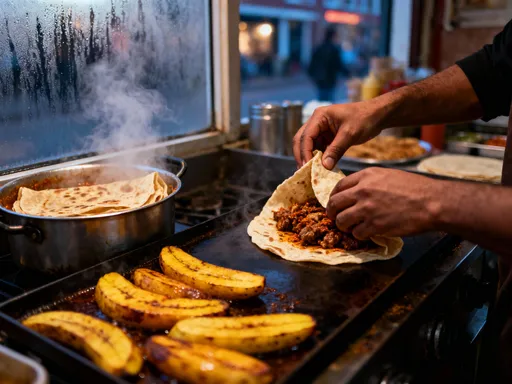
But tapioca is just the beginning. Kuching’s markets are filled with other unique treats. Kuih sepit—delicate, golden-brown coconut cookies twisted into nest-like shapes—are made using a special iron mold heated over charcoal. Sago-based sweets, derived from the sago palm, come in translucent jellies, puddings, and dumplings, often flavored with palm sugar and coconut milk. These are not mass-produced; they are crafted daily, sold in banana leaves or small plastic bags at roadside stalls and night markets.
For travelers, trying these snacks is a way to connect with local foodways. They represent resourcefulness, seasonality, and intergenerational knowledge. Best of all, they are affordable and accessible. You don’t need to dine at a fancy restaurant to taste authenticity. A simple stop at a morning market or evening bazaar can yield a feast of flavors that tell the story of Sarawak’s land and people.
Orangutan-Friendly Souvenirs: Ethical Shopping That Matters
In a world where wildlife souvenirs often do more harm than good, Kuching offers a different path—one where shopping supports conservation. It’s easy to find trinkets shaped like orangutans, hornbills, or proboscis monkeys. But behind many of these items is a troubling reality: illegal wildlife trade, habitat destruction, and exploitation of endangered species. Kuching, home to the Semenggoh Nature Reserve, has taken a stand by promoting ethical alternatives that celebrate wildlife without harming it.
The Semenggoh center, located about 20 kilometers from the city, is a rehabilitation sanctuary for orphaned and injured orangutans. Visitors can observe feeding sessions and learn about conservation efforts. Nearby, several social enterprises have emerged that partner with local artisans to create souvenirs that give back. One such initiative produces notebooks made from recycled paper, printed with illustrations of native birds. Another crafts bamboo utensils, straws, and storage containers—sustainable items that reduce plastic waste while providing income for rural communities.
Perhaps the most meaningful option is the symbolic orangutan adoption program. For a donation, travelers receive a certificate, photo, and updates about a specific orangutan in care. No animal is bought or sold; instead, the funds support food, medical care, and habitat restoration. This model shifts the focus from ownership to stewardship, turning a simple purchase into an act of protection.
These ethical souvenirs are not only kinder to the environment but also more memorable. A bamboo spoon engraved with a hornbill motif carries a story of sustainability. A notebook made from recycled paper speaks to innovation and care. When you choose these items, you become part of a larger effort to preserve Borneo’s biodiversity. You support communities that depend on the forest without destroying it. And you leave with something more valuable than a trinket: the knowledge that your choices made a difference.
Night Markets as Cultural Hubs: Kuching’s Weekend Pulse
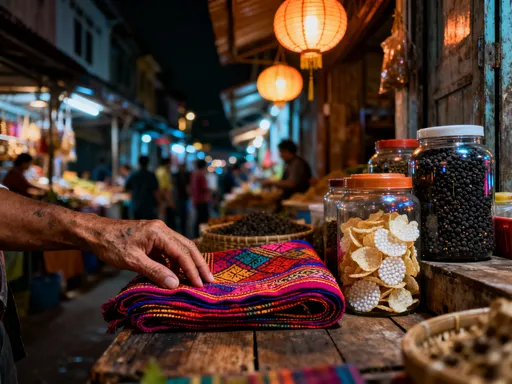
As the sun sets over the Sarawak River, Kuching transforms. The waterfront comes alive with the glow of lanterns, the scent of grilling meat, and the hum of conversation in multiple languages. The Saturday Night Market at the Waterfront and the Sunday market at Padang Merdeka are not just places to eat—they are cultural stages where tradition and modernity meet. Families stroll hand in hand. Musicians strum the sape, a traditional lute-like instrument. Children chase bubbles between stalls. This is Kuching at its most vibrant, its most communal.
While food often takes center stage—satay, laksa, grilled fish wrapped in banana leaves—the markets offer much more. Artisans display hand-carved wooden masks, batik bags dyed with natural pigments, and jars of wild jungle honey harvested from remote forests. You’ll find handmade soaps infused with local herbs, woven mats, and even traditional musical instruments. These goods are not imported for tourists; they are made by people who live here, using skills passed down through generations.
The rhythm of the market is gentle but insistent. Vendors call out greetings, not sales pitches. Bargaining happens with smiles, not aggression. Transactions are often accompanied by small talk—about the weather, the latest festival, or a child’s school performance. This is commerce with humanity at its core. It’s not about maximizing profit; it’s about connection.
For visitors, navigating these markets respectfully enhances the experience. Ask before taking photos, especially of people. Engage vendors with curiosity: “How did you learn this craft?” “What does this pattern mean?” Carry small bills—coins and low-denomination notes—as many stalls don’t accept cards. And take your time. Sit on a plastic stool with a cup of sugarcane juice. Listen to the music. Let the atmosphere settle into your memory.
These weekend gatherings are more than entertainment; they are a living expression of Kuching’s multicultural identity. Malay, Chinese, and indigenous communities come together not as separate entities, but as neighbors. The market is their common ground—a place where differences are celebrated, not erased. To walk through it is to feel the city’s heartbeat, steady and inclusive.
Bringing Kuching Home: Curating Your Own Cultural Collection
When the journey ends and the suitcase is packed, what remains are not just photos, but objects imbued with meaning. A jar of Sarawak pepper. A small piece of pua kumbu. A bamboo spoon. These are not mere souvenirs; they are fragments of experience, each carrying a story of place, people, and purpose. The act of collecting them mindfully—choosing items that reflect authenticity, sustainability, and cultural respect—transforms travel into something deeper: a lasting relationship with a place and its traditions.
Curating a personal collection from Kuching begins with intention. Ask yourself: Does this item have a story? Was it made by someone whose craft I can honor? Does it support a community or cause? A mass-produced keychain might be cheap, but it leaves no trace. A handwoven coaster, however, connects you to a weaver’s hands, her ancestors, and the land that provided the cotton and dyes.
Using these items daily keeps the connection alive. Grind Sarawak pepper over your meals and remember the farm where it was grown. Display a framed pua kumbu swatch on your wall and recall Madam Sari’s hands moving across the loom. Gift a jar of jungle honey to a friend and share the tale of its harvest. These small rituals turn travel memories into living traditions.
Ultimately, wandering Kuching with curiosity and care leads to more than discoveries—it leads to belonging. The city does not give up its treasures easily, but for those who walk slowly, listen closely, and choose thoughtfully, it offers gifts that endure. In a world that often moves too fast, Kuching reminds us that the best things are found not by searching, but by being present. And sometimes, the most unexpected turns lead to the most meaningful keepsakes.