You Won’t Believe What I Ate in Galway’s Hidden Food Scene
Galway’s food culture is more than just fish and chips by the sea—it’s a vibrant mix of tradition, creativity, and local pride hiding in plain sight. I wandered its cobblestone streets not knowing I’d stumble upon market stalls with handmade goat cheese, cozy bakeries serving sourdough with seaweed salt, and pint-sized pubs where oysters taste like the Atlantic breeze. This isn’t tourist fare; it’s the real deal, loved by locals and whispered about in hushed tones. What I discovered was not just a meal, but a way of life—where food is slow, seasonal, and steeped in story. In a city where the wind carries the scent of salt and baking bread, every bite feels like an invitation to belong.
Discovering Galway’s Culinary Heart
Galway is a city where geography and gastronomy are inseparable. Nestled between the wild Atlantic coast and the fertile farmlands of County Galway, its food culture has been shaped by centuries of fishing, farming, and foraging. Unlike larger Irish cities where global chains dominate, Galway has preserved its culinary soul through a deep respect for local ingredients and seasonal rhythms. The city’s compact size—easily walkable from the Spanish Arch to the Claddagh—makes it ideal for culinary exploration. Every turn reveals a new scent: wood smoke from a bakery chimney, brine from a seafood stall, or the earthy aroma of mushrooms just pulled from a nearby forest.
What sets Galway apart is how seamlessly tradition and innovation coexist. You’ll find elderly women selling homemade brown bread beside young chefs fermenting their own miso using Irish barley. This balance is not accidental—it’s the result of a community that values authenticity over spectacle. The Gaelic roots of the region, still evident in street signs and everyday speech, reinforce a cultural pride that extends to the kitchen. Meals here are not rushed; they are savored, often shared, and always connected to place. A stew simmered for hours with lamb from Connemara isn’t just food—it’s heritage on a plate.
The farm-to-table movement didn’t need to be imported to Galway; it was always here. What’s changed is the visibility. Once hidden in family kitchens and village halls, these traditions are now celebrated in pop-up dinners, supper clubs, and neighborhood bistros. Yet, despite growing recognition, many of the best experiences remain off the radar of mainstream tourism. There are no neon signs pointing to the woman who sells nettle soup from her garden gate, or the fisherman who hands over still-dripping oysters to a chef he’s known for 30 years. These moments are found through wandering, listening, and being present.
The Market That Feeds the City: What You Won’t Find on Tourist Maps
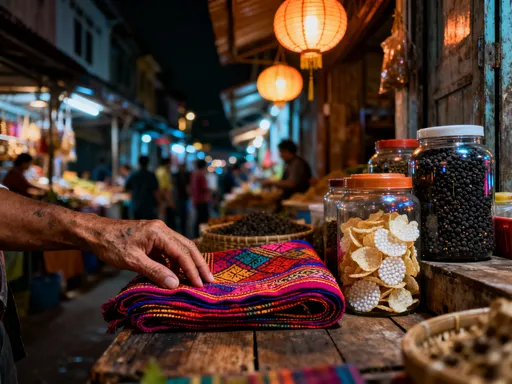
If Galway has a beating heart, it’s the Galway Market at St. Nicholas’ Church. Every Saturday and Sunday, the square transforms into a feast for the senses. More than just a place to buy food, it’s a social ritual—a weekly gathering where farmers, artisans, and neighbors reconnect. Unlike curated food halls in other cities, this market resists polish. Stalls are often simple: wooden crates, hand-lettered signs, and baskets lined with linen. There’s no branding, no influencers vying for the perfect shot—just real food made by real people.
Here, you’ll meet a Connemara fisherman selling smoked salmon cured with juniper and oak. His family has fished these waters for generations, and he’ll tell you—without pride, as simple fact—that the smoke comes from driftwood gathered after winter storms. Nearby, a beekeeper offers wildflower honey harvested from hillsides where no pesticides have touched the soil in decades. The flavor is complex—floral, herbal, with a hint of thyme and heather. It’s not the kind of honey you find in supermarkets; it tastes of a specific place, a specific season.
One of the most striking aspects of the market is its rhythm. Arrive too late, and the best items are gone. The fresh mussels pulled from Galway Bay that morning? Sold by noon. The goat cheese from a small herd in County Mayo? Gone by 11:30 a.m. This isn’t scarcity for marketing—it’s the reality of small-scale production. Nothing is mass-produced, nothing is frozen. What you get is what was made, harvested, or caught that week, sometimes that morning. Vendors don’t advertise; they rely on word of mouth and returning customers who know the value of timing.
Engaging with the vendors is part of the experience. Ask about their methods, their land, their families, and you’ll often be rewarded with a sample, a story, or even a recipe. One elderly woman, selling handmade potato farls, shared how her grandmother taught her to cook over a peat fire. “The secret,” she said, patting the dough, “is in the touch—gentle, like you’re calming a child.” These moments of connection are what make the market more than a place to shop. It’s where food becomes relationship.
Beyond Pub Grub: The Real Taste of Local Pubs
The idea of the Irish pub as a place for beer and stew is outdated—especially in Galway. While some tourist-oriented pubs stick to predictable menus, the true spirit of pub dining lives in the side streets and back alleys. These are family-run establishments, often passed down through generations, where the food is as important as the drink. The atmosphere is warm, unpretentious, and deeply communal. Long wooden tables encourage conversation. Strangers share stories over pints. And the food? It’s made with care, often using ingredients from the owner’s garden or a neighboring farm.
One such pub, tucked behind Quay Street, hosts an oyster night every Friday. The oysters come from the nearby town of Kinvara, pulled from the water just hours before. Shucked to order, they’re served simply—on ice, with a squeeze of lemon and a dash of mignonette made with local vinegar. The chef, a native of Galway who trained in Dublin and London, insists on this ritual. “If it’s not fresh, it’s not worth serving,” he says. On these nights, the pub fills with locals who come not just for the oysters, but for the music, the laughter, the sense of belonging.
Another hidden gem offers a slow-cooked lamb stew with rosemary from the pub’s own window boxes. The meat comes from a farm in the Burren, where sheep graze on wild thyme and sea lavender. The stew simmers for eight hours, developing a depth of flavor that no quick version could replicate. It’s served with soda bread baked in-house, still warm from the oven. There’s no menu board outside, no website, no online reservations. You find it by walking, by noticing the line of regulars, by following the smell of onions caramelizing in butter.
These pubs are not trying to impress. They’re not chasing Michelin stars or viral fame. They exist to feed their community, to preserve a way of life. When you eat here, you’re not a customer—you’re a guest. And that changes everything. The food is honest, generous, and deeply satisfying. It’s not about fusion or flair; it’s about flavor, memory, and connection. In a world of fast food and fleeting trends, these pubs are a reminder that the best meals are often the simplest.
Bakeries, Seaweed, and Sourdough: A Coastal Twist on Tradition
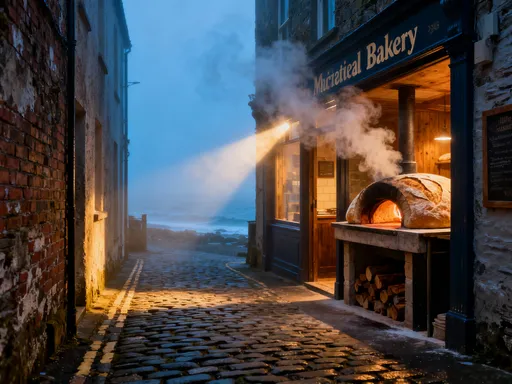
Galway’s artisan bakeries are redefining what Irish bread can be. Far from the mass-produced loaves found in chain supermarkets, these small operations are reviving ancient techniques while embracing local ingredients. One bakery, hidden in a narrow lane off William Street, has gained a quiet reputation for its sourdough. Baked in a wood-fired oven using flour milled from heritage wheat grown in County Clare, each loaf has a crust that crackles like sea ice and a crumb that’s moist, tangy, and deeply flavorful.
What makes this bakery unique is its use of Atlantic seaweed. Dulse, a red algae harvested sustainably from rocky shores, is ground into powder and folded into the dough. The result is a subtle umami richness—a taste of the ocean in every bite. Paired with cultured butter from a nearby dairy farm, where cows graze on iodine-rich coastal grass, the experience is transformative. This isn’t just bread; it’s a reflection of the landscape, a edible map of wind, water, and soil.
The bakers here are not chefs in the traditional sense. They are more like stewards—of grain, of fermentation, of time. They wake before dawn to feed their starters, monitor oven temperatures, and hand-shape each loaf. There’s no automation, no shortcuts. The process is slow, deliberate, and deeply intentional. Customers arrive early, not just for the bread, but for the ritual—the warmth of the oven, the scent of rising dough, the quiet hum of creation.
Other bakeries in the city are experimenting with wild herbs, ancient grains, and even spelt grown in rotation with potatoes on family farms. One offers a rye loaf studded with caraway and honey from Galway hives. Another bakes scones with bilberries foraged from the hills, served with clotted cream made from Jersey cow milk. These are not novelty items; they are part of a growing movement to reconnect food with place. In a time when so much is imported, processed, or anonymous, these bakeries offer something rare: bread with a story, with roots, with soul.
Seafood Like No Other: From Boat to Table in Less Than a Day
In Galway, seafood isn’t just a menu item—it’s a way of life. The city’s proximity to the Atlantic means that fish and shellfish arrive fresh, often within hours of being caught. Nowhere is this more evident than in the small chowder houses and family-run seafood restaurants that dot the docks. One such place, with no sign and only six tables, is known only by word of mouth. Run by a husband-and-wife team—she a former marine biologist, he a third-generation fisherman—it serves a chowder so rich and flavorful that regulars claim it tastes like “the ocean in a bowl.”
The secret lies in the ingredients. The mussels are from Galway Bay, the salmon from the River Corrib, the oysters from the famous beds of Kinvara. But more than that, it’s the timing. Fishermen deliver their catch directly to the kitchen each morning. There’s no warehouse, no distributor, no freezing. What’s on the menu depends on what came in that day. If the weather kept the boats in, the menu changes. This isn’t inconvenience—it’s integrity. It means that every meal is in sync with nature’s rhythm.
Sustainability is not a buzzword here; it’s a necessity. Many of the small-scale fishermen use traditional methods—hand lines, creels, and nets with escape gaps for juvenile fish. They know the tides, the seasons, the health of the stocks. They fish not to maximize profit, but to sustain their families and their communities. When you eat their catch, you’re supporting a system that values long-term health over short-term gain.
One unforgettable experience was a visit to a tiny waterfront kitchen where oysters were shucked to order and served on sea salt harvested from the coast. The chef, a quiet man with hands worn by years of work, explained that he only serves oysters in months with an “R”—a traditional rule that aligns with spawning cycles. “It’s not just about taste,” he said. “It’s about respect.” In a world of year-round availability, this kind of restraint is radical. It reminds us that good food doesn’t come from convenience—it comes from care.
Where Locals Eat: The Unmarked Doors and Word-of-Mouth Spots
The most memorable meals in Galway are often the hardest to find. There are no websites, no Instagram pages, no menus posted online. These are places discovered through conversation, through trust, through being in the right place at the right time. One such spot is a tiny café run by a Galway-born chef who trained in Paris and worked in Michelin-starred kitchens before returning home. Now, she serves boxty—traditional Irish potato pancakes—with a modern twist: filled with wild mushroom and goat cheese, topped with a drizzle of elderflower syrup.
The café has no sign. You find it by walking past a bookshop, down a narrow alley, and looking for the steam rising from the kitchen window. Inside, the decor is simple: wooden tables, mason jars, a chalkboard with that day’s offerings. The chef often comes out to talk with guests, not for publicity, but because she enjoys sharing her journey. “I came back because I missed the flavors of home,” she says. “But I also wanted to show what they could become.”
Other hidden gems include a lunch counter inside a fishmonger’s shop, where you can order a crab roll made with meat picked that morning. Or a community kitchen in Salthill that opens only on Thursdays, serving a rotating menu based on what’s fresh at the market. These places don’t need marketing. Their reputation grows through satisfaction, through the kind of meal that makes you say, “I have to tell someone about this.”
The key to finding them is simple: ask. Not a tour guide, not an app—but a local. A bartender, a bookseller, a woman selling flowers at the market. Ask, “Where do you eat?” and you’ll often be met with a smile, a pause, and a quiet recommendation. These places are not secrets because they want to exclude; they’re hidden because they’ve chosen intimacy over scale. They’re not trying to feed the world—they’re trying to feed their neighbors, one honest meal at a time.
How to Experience Galway’s Food Culture Like a Local
To truly taste Galway, you must slow down. This is not a city for checklist tourism. The best experiences unfold gradually, through wandering, waiting, and listening. Start with timing. Visit the Galway Market on a Saturday morning—arrive by 9 a.m. to beat the crowds and catch the freshest picks. Talk to vendors. Ask where their ingredients come from. Try samples without hesitation. Many will offer a taste if you show genuine interest.
When it comes to pubs, avoid those with neon signs and multi-page menus in multiple languages. Instead, follow the locals. If you see a small pub with a few older men outside smoking, or a group of women laughing at a corner table, that’s a good sign. Order simply: a stew, a seafood chowder, a plate of oysters. If you’re unsure, ask, “What’s good today?” The answer will likely be the freshest, most authentic option.
Bakeries are best visited in the late morning, when the second batch of bread comes out of the oven. Bring cash—many small shops don’t accept cards. And don’t be afraid to return to the same place more than once. Regulars are noticed, remembered, and sometimes rewarded with a bonus scone or a sample of something new.
Most importantly, approach food in Galway with humility and curiosity. This is not a performance. It’s not about documenting every meal for social media. It’s about presence—about savoring the warmth of a chipped mug of tea, the crunch of a perfectly baked loaf, the briny kiss of a fresh oyster. Ask questions. Listen to stories. Share a table. Let the city feed not just your body, but your spirit.
And when you leave, you’ll carry more than memories. You’ll carry a deeper understanding of what it means to eat with intention, with connection, with joy. Galway doesn’t give up its secrets easily—but for those who wander with an open heart, it offers a feast unlike any other.
Galway’s true flavor doesn’t live in guidebooks—it’s shared over a chipped mug of tea, whispered across a market counter, or discovered in a alleyway where the smell of baking soda bread leads to a door left ajar. To eat here is to connect, to belong, if only for a meal. The city invites you not just to visit, but to taste, remember, and return.