You Won’t Believe These Hidden Natural Escapes in Boston
When you think of Boston, historic streets and brick row houses probably come to mind—but what if I told you the city hides breathtaking natural beauty just minutes from downtown? I spent a week exploring Boston the slow way, ditching rush-hour tours for quiet riverside walks, hidden gardens, and coastal trails. What I found was a side of the city most visitors miss—peaceful, green, and alive with seasonal charm. Away from the crowds tracing the Freedom Trail, Boston reveals a quieter rhythm: the lap of waves along the Charles, the rustle of leaves in century-old parks, the scent of pine carried on ocean breezes from nearby islands. This is a city where urban energy and natural serenity coexist, often within steps of each other.
Reimagining Boston: Beyond the Freedom Trail
Boston’s reputation as a historic city is well-earned. Each year, thousands follow the red-brick path of the Freedom Trail, moving from landmark to landmark with focused determination. While these sites offer rich insight into America’s past, they represent only one layer of the city’s identity. Beneath the cobblestones and colonial facades lies a greener, more tranquil Boston—one that rewards curiosity and a willingness to wander without an agenda. Traveling slowly through the city allows visitors to experience not just its history, but its heartbeat: the quiet corners where nature thrives alongside urban life.
Slow travel is not about how far you go, but how deeply you engage. In Boston, this means swapping crowded trolleys for quiet footpaths, trading timed museum entries for long moments on a park bench, and replacing rigid itineraries with open-ended exploration. The benefits are both emotional and physical. Studies show that spending time in green spaces reduces stress, improves mood, and enhances mental clarity. When travelers embrace this approach, they often find themselves more present, more observant, and more connected to the places they visit. Boston, with its compact size and abundant natural offerings, is an ideal city for this kind of mindful exploration.
What makes Boston’s natural escapes so remarkable is their accessibility. Unlike many major cities where parks are isolated or require long commutes, Boston’s green spaces are woven into the urban fabric. A short walk from Back Bay or Beacon Hill can lead to riverside paths, wooded trails, or secluded gardens. These spots are not hidden because they are remote; they are overlooked because most visitors don’t pause long enough to notice them. By shifting focus from quantity to quality—from checking off attractions to savoring moments—travelers uncover a version of Boston that feels personal, restorative, and refreshingly authentic.
The Emerald Necklace: A Green Ribbon Through the City
One of the most ambitious urban park systems in the United States, the Emerald Necklace was designed by Frederick Law Olmsted in the late 19th century as a series of interconnected green spaces stretching from downtown Boston to the outskirts of the city. This seven-mile chain of parks includes Boston Common, the Public Garden, the Back Bay Fens, the Riverway, Olmsted Park, Jamaica Pond, and Franklin Park. Together, they form a continuous corridor of nature that links diverse neighborhoods while offering residents and visitors a seamless escape from city life.
Walking the full length of the Emerald Necklace is an experience that unfolds gradually, revealing different facets of Boston’s natural landscape. The journey begins in the heart of the city, where Boston Common—America’s oldest public park—offers open lawns and mature trees that provide shade and calm amid the surrounding bustle. A short stroll leads into the Public Garden, famous for its swan boats and seasonal flower displays. Here, the atmosphere shifts: the air carries the scent of blooming tulips in spring and crisp fallen leaves in autumn. The carefully landscaped paths and ornamental pond create a sense of harmony, a deliberate contrast to the city’s grid-like streets.
As the Necklace moves westward, the character of the parks evolves. The Back Bay Fens, once a tidal marsh, was transformed by Olmsted into a naturalistic park with winding waterways and native plantings. This section feels wilder, more fluid, with cattails swaying at the water’s edge and herons occasionally spotted in the early morning. Benches along the path invite rest and reflection, while footbridges offer vantage points over the meandering streams. The design encourages a slower pace, one that matches the rhythm of the water rather than the rush of traffic.
Jamaica Pond, the crown jewel of the Necklace, is a serene 50-acre body of water surrounded by forested trails. Locals jog, walk dogs, and paddle small boats across its surface. The 2.2-mile loop trail is ideal for a leisurely hike, with dappled sunlight filtering through oak and pine trees. In winter, the pond sometimes freezes, drawing ice skaters who glide under bare branches. Franklin Park, the largest and most diverse of the Necklace parks, includes a zoo, formal gardens, and miles of wooded paths. Though less visited than its eastern counterparts, it offers some of the most immersive natural experiences in the city.
For travelers, navigating the Emerald Necklace is straightforward. Start at Boston Common and follow the green signs or the path of the Muddy River, which runs through much of the system. Early mornings on weekends are ideal for avoiding crowds. Comfortable walking shoes, a water bottle, and a light snack are all that’s needed. No map is required—simply follow the green, and let the city fade behind you.
Charles River Walk: Where Urban Meets Wild
Stretching over eight miles along the border of Boston and Cambridge, the Charles River Esplanade is a dynamic corridor where city life and natural beauty converge. This waterfront path offers sweeping views of the Boston skyline, the Harvard Bridge, and the起伏 of the river itself, which reflects the changing sky in endless variations. At any hour, the Esplanade pulses with activity: cyclists pedal steadily, runners weave through joggers, and families picnic on the grassy banks. Yet, despite its popularity, the path also holds pockets of stillness—places where the city’s noise recedes and the natural world takes center stage.
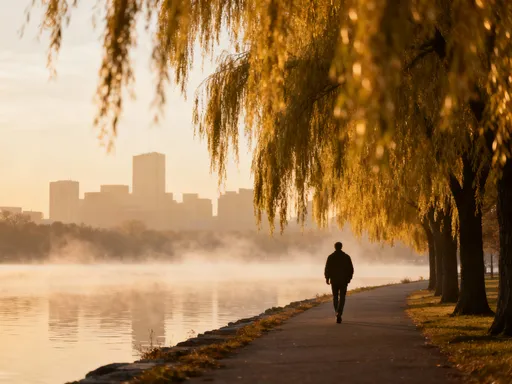
A morning bike ride along the Esplanade reveals a different rhythm. Mist rises from the water as rowers in sleek shells cut precise lines across the surface. Ducks and geese drift near the shore, undisturbed by the occasional passing kayak. Willow trees dip their branches into the current, and songbirds flit between the reeds. The air is cool and fresh, carrying the clean scent of water and earth. As the sun climbs, the skyline glows pink and gold, a dramatic backdrop to the quiet movement on the river.
The Charles River changes with the seasons, each offering a distinct experience. In spring, cherry blossoms bloom along Memorial Drive, drawing visitors for quiet strolls beneath the pink canopies. Summer brings sailboats and paddleboarders, while the banks fill with people enjoying the long daylight hours. Fall transforms the riverside into a tapestry of red, orange, and yellow, the trees reflecting in the calm water like a living painting. Even in winter, the Esplanade retains its allure—frozen patches glitter underfoot, and the bare trees frame stark, beautiful views of the city.
For those seeking solitude, quieter access points exist away from the main entrances near the Museum of Science or the Hatch Shell. Herter Park, located in the Allston-Brighton neighborhood, is a local favorite. Less crowded and more natural in feel, it offers open fields, wooded edges, and direct river access. Parking is available, and the path connects seamlessly to the main Esplanade route. Whether walking, biking, or simply sitting on a bench with a book, Herter Park exemplifies how urban nature can provide both recreation and retreat.
Blue Hills Reservation: Wilderness Just 20 Minutes Away
Just a short bus ride from downtown Boston lies a landscape that feels worlds away. The Blue Hills Reservation spans over 7,000 acres of forest, wetlands, and rocky summits, offering one of the most accessible wilderness experiences near any major U.S. city. Operated by the Massachusetts Department of Conservation and Recreation, the reservation includes more than 125 miles of trails, five ponds, and a network of scenic overlooks. At its highest point, Great Blue Hill rises 635 feet above sea level, providing panoramic views that stretch from Boston’s skyline to the distant Atlantic coast.
A half-day hike to the summit of Great Blue Hill is a transformative experience. The trail begins in a dense mixed forest of oak, pine, and maple, where the air is cool and the ground soft with pine needles. Birdsong fills the canopy, and squirrels dart across the path. As the elevation increases, the forest opens to rocky outcrops and ledges with sweeping vistas. On a clear day, the entire Boston metropolitan area unfolds below—a patchwork of neighborhoods, rivers, and harbor islands. The contrast between the quiet forest and the distant city hum is striking, a reminder of how quickly nature can envelop you, even in a densely populated region.
The hike is moderate in difficulty, suitable for most fitness levels. The shortest route, the Skyline Trail, gains elevation steadily but without steep climbs. Trail markers are well-maintained, and information kiosks at the main entrances provide maps and safety tips. For visitors without a car, public transit offers a viable option. The MBTA’s Red Line goes to Quincy Center, where the 236 bus runs directly to the reservation’s main entrance on Hillside Street. The ride takes about 30 minutes, making it possible to start the hike by mid-morning and return to the city by late afternoon.
At the summit, the Milton Observatory—a historic stone tower—houses a small museum and weather station. Built in the 1880s, it was once used for meteorological research and still serves as a symbol of the region’s scientific heritage. Visitors can climb to the top for unobstructed views in all directions. On clear days, it’s possible to see as far as Plymouth and Cape Cod. Picnic tables and benches make it an ideal spot to rest, eat lunch, and absorb the quiet majesty of the landscape.
Coastal Serenity at Spectacle Island
Among the 34 islands that dot Boston Harbor, Spectacle Island stands out as a destination of natural beauty and peaceful solitude. Once used for landfill and recreation, the island has been transformed into a protected park managed by the Boston Harbor Islands National and State Park. Today, it offers sandy coves, grassy hills, and well-maintained trails that loop around its perimeter. Despite being only a 20-minute ferry ride from downtown, the island feels remote, a place where the rhythms of nature replace the urgency of urban life.
A summer visit begins with a ferry from Long Wharf, where the city skyline shrinks behind you with each passing minute. As the boat approaches the island, the sound of waves and seabirds grows louder. The dock is small and unassuming, leading to a path that winds uphill through native grasses and wildflowers. The main trail forms a loop of about 1.5 miles, passing rocky outcrops, secluded beaches, and wooden observation platforms. At the highest point, the Harbor Islands Pavilion offers 360-degree views of the bay, with other islands visible in the distance.
What makes Spectacle Island special is its sense of discovery. Unlike more developed parks, it has minimal infrastructure—no restaurants, no gift shops, just clean restrooms and a small visitor center with exhibits on the island’s history and ecology. Visitors are encouraged to bring their own food, water, and supplies. Many choose to picnic on the grassy knolls or sunbathe on the small sandy beach. Swimming is not permitted, but the calm waters are perfect for kayaking and paddleboarding, which can be arranged through local outfitters.
Ferry service runs seasonally, typically from late May through October. Tickets can be purchased online or at the dock, and round-trip fares are reasonable for a full day of exploration. Because the island limits daily visitors, it rarely feels crowded. Families, couples, and solo travelers all find space to relax, read, or nap in the sun. For those seeking a digital detox or a break from constant stimulation, Spectacle Island offers a rare opportunity to unplug and reconnect—with nature, with companions, or with oneself.
Hidden Gardens and Urban Oases
Beyond the well-known parks, Boston is home to a network of smaller, lesser-known green spaces that offer moments of peace and beauty. These urban oases are often tucked into residential neighborhoods, maintained by local communities, and visited primarily by nearby residents. Their quiet charm makes them ideal for slow, reflective exploration.
The Arnold Arboretum, affiliated with Harvard University, is one of the most significant. Spanning 281 acres in the Jamaica Plain neighborhood, it functions as both a research institution and a public garden. Its collection includes over 15,000 trees and shrubs, many labeled for educational purposes. In spring, the cherry blossoms and magnolias draw quiet crowds, while fall brings a spectacular display of foliage. Unlike more formal gardens, the Arboretum encourages wandering—its paths are unpaved in places, and the landscape feels natural, almost wild.
Another hidden gem is the Garvey Park Conservancy in Dorchester. Once an underused lot, it has been revitalized by local volunteers into a vibrant green space with flower beds, a community garden, and a children’s play area. Seasonal plantings ensure color throughout the year, and benches provide places to sit and watch the neighborhood life unfold. Similarly, the Malcolm X Plaza in Roxbury combines urban design with nature, featuring a central fountain, flowering trees, and shaded seating areas. These spaces are more than decorative—they support mental well-being, foster community ties, and offer safe, welcoming environments for people of all ages.
Visiting these gardens requires no special planning, just a willingness to explore beyond the tourist zones. They are accessible by public transit or a pleasant walk from nearby areas. Each offers a different mood: the Arboretum for solitude and study, Garvey Park for community warmth, Malcolm X Plaza for urban respite. Together, they illustrate how small-scale green spaces contribute to the city’s overall quality of life.
Traveling Slow: How to Make It Work in a Compact City
Slow travel in Boston is not only possible—it’s deeply rewarding. The city’s walkability, extensive public transit, and abundance of green spaces make it ideal for unhurried exploration. The key is intention. Rather than trying to see everything, focus on experiencing a few places deeply. Choose accommodations within walking distance of parks or the river. Book a hotel near the Back Bay or a rental in Jamaica Plain, where nature is never far.
Planning a flexible itinerary allows room for spontaneity. Instead of scheduling every hour, block out mornings or afternoons for nature walks, and leave space for lingering. Use the MBTA subway and bus lines to reach trailheads or ferry docks without the stress of driving or parking. Apps like Transit or Google Maps make navigation simple, even for first-time visitors.
The mindset shift is the most important part. Slow travel means observing details: the pattern of bark on an old tree, the way light falls on a pond at dusk, the sound of wind through tall grass. It means sitting on a bench for 20 minutes just to watch the world pass by. It means returning to the same park on different days to see how it changes with the weather and the hour. These small acts deepen connection and create lasting memories.
For families, slow travel offers a chance to model mindfulness for children. A walk through the Arboretum can become a lesson in plants and seasons. A ferry ride to an island turns into an adventure in geography and ecology. Even a simple picnic in a neighborhood park becomes an event when approached with presence and appreciation.
Conclusion
Boston’s natural scenery isn’t hidden because it’s inaccessible—it’s hidden because we move too fast to see it. By slowing down, we don’t just visit the city; we truly feel it. The rustle of leaves on the Esplanade, the stillness atop Great Blue Hill, the salt breeze off Spectacle Island—these moments transform a trip into a memory. The real journey isn’t about distance covered, but depth discovered. So next time you’re in Boston, leave the map behind. Walk until the noise fades. Let the city surprise you—with green, with calm, with beauty you never expected.